Cotswolds Villages Explained: The History Behind the Most Famous Places (and What You’ll Find Now)
The Cotswolds is often described as “pretty”, but the real story is why these places look the way they do. Much of what you see today is the legacy of the medieval wool trade, market charters, coaching routes, and wealthy merchants who built in honey-coloured limestone and never really stopped.
Here’s a village-by-village breakdown of the Cotswolds places people talk about most, with the history that shaped them and what a visitor can expect to see now.
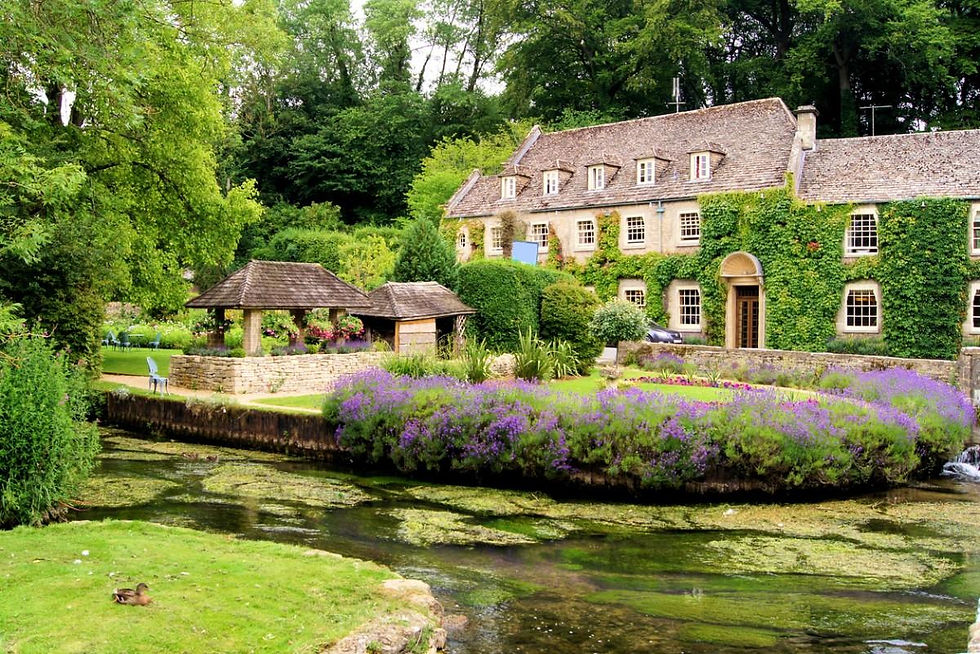
Bibury
If Bibury looks like a postcard, it’s because it was built around industry, not aesthetics.
The headline attraction is Arlington Row, a line of cottages originally built in 1380 as a monastic wool store, later converted into weavers’ cottages in the 17th century. The whole set-up is tied to the wool and cloth economy, with cloth historically processed nearby and dried on Rack Isle opposite the cottages.
What you’ll find now: a small, heavily photographed village on the River Coln, with Arlington Row as the main draw. The cottages are privately occupied, and the area is managed to protect the historic character.
Castle Combe
Castle Combe has a “frozen in time” feel because it largely avoided modern expansion in the centre.
It’s a village and civil parish in Wiltshire, and the 2021 census population for the parish was 356. That small size is part of what makes it feel so calm and contained.
What you’ll find now: a compact village centre with historic stone buildings, narrow streets, and a very scenic, walkable core. It’s the sort of place you can see properly in an hour, then move on.

Bourton-on-the-Water
Bourton-on-the-Water is built around the River Windrush, which is why it feels so open and people-oriented. It’s also one of the most “attraction heavy” places in the Cotswolds.
For scale, the parish population at the 2021 census is listed as 4,178.
It’s known for visitor attractions including The Model Village, a 1:9 replica built in the 1930s and opened in 1937, the Cotswold Motoring Museum, and Birdland Park and Gardens.
What you’ll find now: a busy, central village where you can spend half a day without needing a plan, because the attractions and riverside layout do the work for you.

Stow-on-the-Wold
Stow-on-the-Wold is a market town created by geography and trade routes.
It sits around 800 feet up and was founded to absorb trade where roads converged. Fairs have been held by royal charter since 1330, and horse fairs still take place twice a year.
Stow is also linked to national history via the Battle of Stow-on-the-Wold in 1646, often described as the final major battle of the First English Civil War.
What you’ll find now: a proper market square layout, antiques and interiors browsing, and a “town” feel that’s different from the smaller villages.

Chipping Campden
Chipping Campden is a textbook example of a Cotswolds market town shaped by commerce.
The word “Chipping” comes from Old English for market, and one of its defining buildings is the Market Hall, built in 1627 by Sir Baptist Hicks. It’s still in use today, which is part of what makes Campden feel like a real town rather than a visitor set-piece.
What you’ll find now: a picture-perfect main street with a historic market core, plus landmark buildings that give it a stronger heritage town feel than most villages.

Broadway
Broadway is often called the gateway to the Cotswolds, and it has a slightly different character to the smaller villages because it sits on historic routes.
Its big landmark is Broadway Tower, a Saxon-style folly. It was designed by architect James Wyatt and built in 1798 to 1799, with the concept linked to Capability Brown’s vision for the landscape.
Broadway Hill also has a history as a beacon hill, where signal fires were lit on special occasions.
What you’ll find now: a classic high street village layout, and a bigger day out feel thanks to Broadway Tower and the wider grounds around it.

Burford
Burford is often the town people fall for because it feels substantial, not staged.
Between the 14th and 17th centuries, Burford was important for its wool trade, and its high street still reflects that wealth.
A major landmark is the Church of St John the Baptist, known for features such as the merchants’ guild chapel and surviving carvings.
What you’ll find now: a proper Cotswolds town experience with heritage architecture, a long high street, and enough to fill a full day without village-hopping.

The fast way to choose where to go (based on what you want)
If you only have time for a couple of places, this is the sensible approach:
If you want the most historic “wool story” in one stop
Bibury for Arlington Row’s origin as a monastic wool store and later weavers’ cottages.
If you want a true market town with medieval trade roots
Stow-on-the-Wold for royal market charter history and the market square feel.
If you want built heritage that still feels functional
Chipping Campden for the 1627 Market Hall that remains part of the town’s identity.
If you want a “Cotswolds day out” with attractions built in
Bourton-on-the-Water, because it’s not just scenery, it’s also the Model Village, motoring museum, and other visitor stops.
If you want the best blend of town feel and architecture
Burford, thanks to its wool-trade legacy and landmark church, plus a high street you can actually spend time on.
Discover more in our Area Guides. Click here to browse our latest guides and recommendations.


Comments